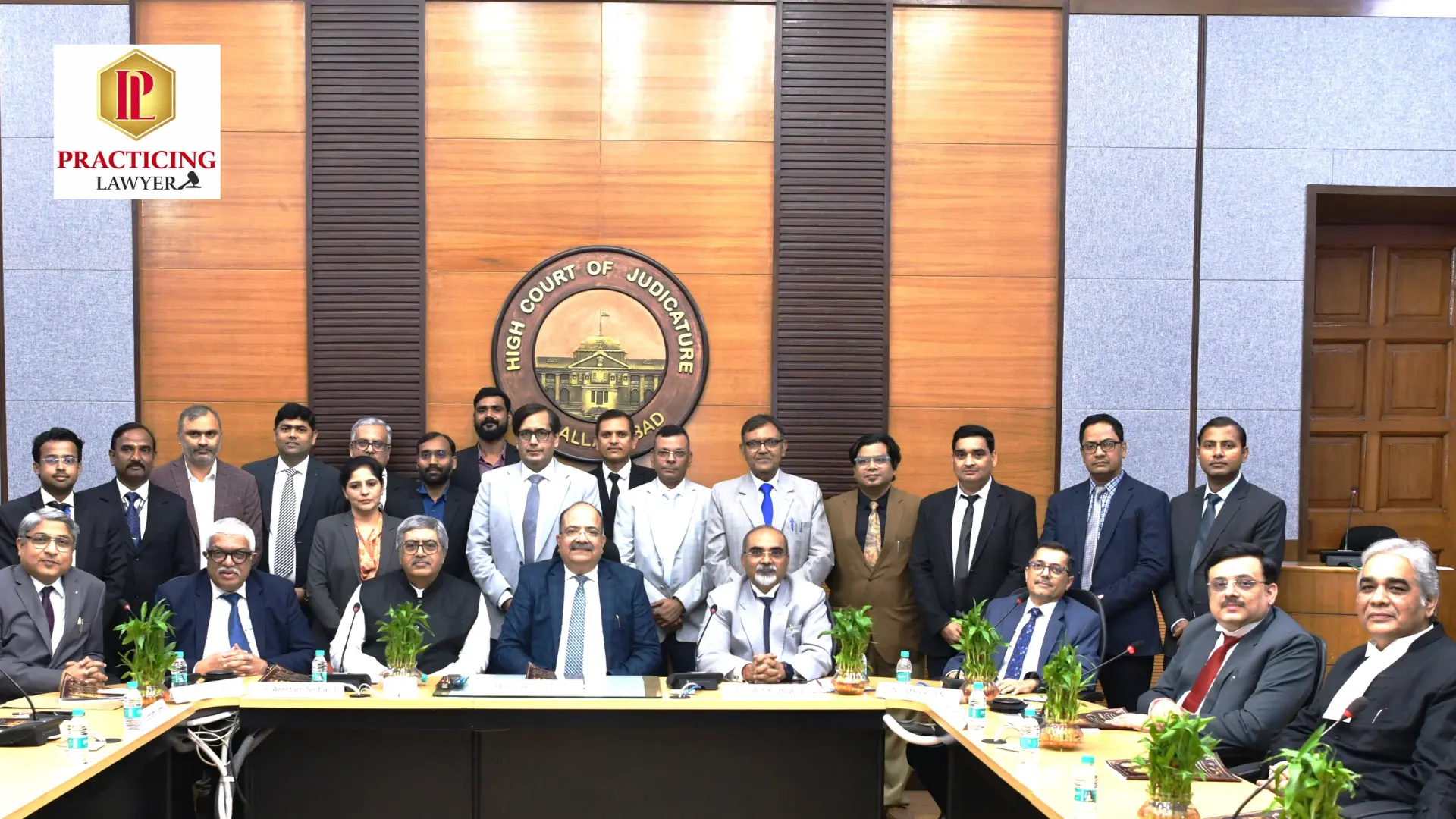
The Allahabad High Court, while making significant observations on the increasing trend of live-in relationships, has remarked that under the influence of western ideas, the tendency among youth to live together without marriage is on the rise, posing a serious threat to Indian social values.
The Court noted that when such relationships fail, legal proceedings are often initiated by the aggrieved party, resulting in an unnecessary influx of litigation before courts.
In this context, the Court, in strong words, observed that,
“…………..this case is an example of increasing tendency of the youth living together without solemnization of marriage under the influence of western ideas and the concept of live-in. After such relationships fail, F.I.R. is lodged and the laws being in favour of women, the boys/men get convicted relying upon the laws which were made when the concept of live-in was no where in existence.”
The aforesaid observations were made by a Division Bench comprising Justice Siddharth and Justice Prashant Mishra-I while allowing the criminal appeal of the appellant Chandresh and setting aside the judgment of conviction and sentence dated 6 March 2024 passed by the Special Judge, POCSO Court, Maharajganj.
Facts of the Case:
According to the prosecution case, on 22 February 2021, the appellant allegedly took the complainant’s daughter (aged about 18½ years) to Bengaluru on the pretext of marriage. She returned on 6 August 2021 and alleged that the appellant neither married her nor allowed her to stay with him. On this basis, the appellant was convicted under Sections 363, 366, 323 and 376 of the IPC, Section 6 of the POCSO Act and Section 3(2)(V) of the SC/ST Act.
Issues Before the Court:
The principal issues before the High Court were the age of the victim and the question of consent.
Court’s Findings:
Upon examining the material on record, the Court found that no valid school certificate as required under the Juvenile Justice (Care & Protection of Children) Rules, 2007 had been produced. The ossification test report indicated that the victim was approximately 20 years old. While the FIR mentioned her age as 18½ years, she was later described as 17 years old before the Court, which was found to be doubtful.
The Court further noted that the victim herself admitted that she had left her home voluntarily, travelled by public transport from Gorakhpur to Bangalore, encountered police personnel and members of the public on the way, but never raised any objection. She lived with the appellant for about six months and had consensual physical relations with him.
Final Decision:
In view of these facts, the High Court held that once the victim was found to be a major and the relationship consensual, conviction under Sections 363 and 366 IPC for abduction was legally unsustainable. The conviction under Section 6 of the POCSO Act and Section 376 IPC was also held to be untenable. Further, treating Section 3(2)(V) of the SC/ST Act as not an independent provision and finding no specific role of the appellant under Section 323 IPC, the Court set aside those convictions as well.
Consequently, the High Court directed the immediate release of the appellant and issued directions to the trial court to take appropriate steps within two weeks in accordance with law.
Case: Chandresh vs State Of U.P. And 3 Others
Date of Order: 08.01.2026
See Order: Chandresh vs State Of U.P. And 3 Others