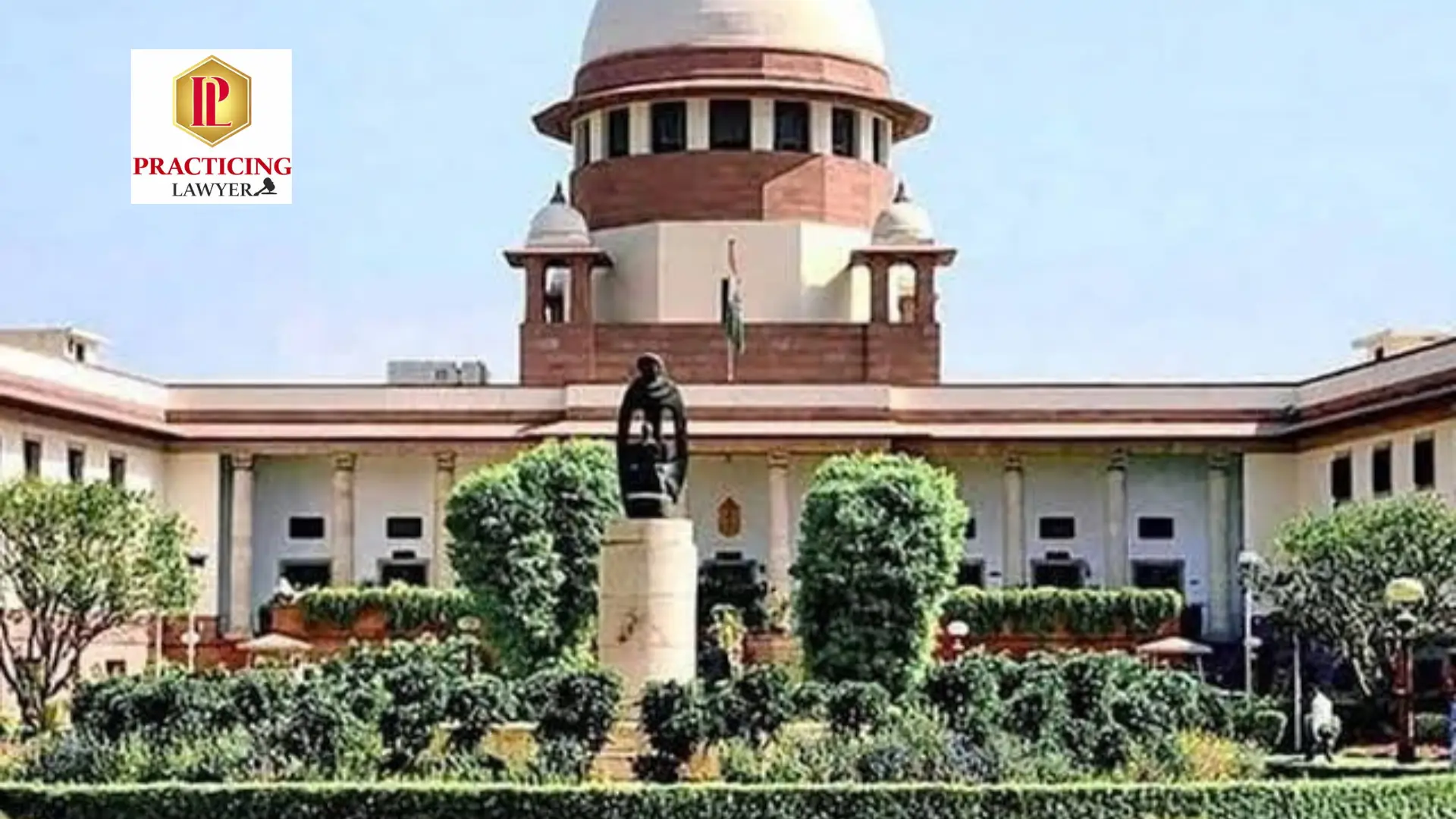
In the case of Md. Firoz Mansuri and Others vs. State of Bihar and others (2026 INSC 68), the Supreme Court of India in its judgment of 16 January 2026 again reiterated the legal provision that State Governments had the legal capacity to fix certain educational qualifications to the appointment in the public posts. The legal validity of the Bihar Pharmacist Cadres Rules, 2014 (amended in 2024) with a Diploma in Pharmacy was held to be legally valid by the Supreme Court of India.
The Division Bench of Justices Satish Chandra Sharma and M.M Sundresh rejected the petitions filed by the candidates who had acquired Bachelor and Master degrees in Pharmacy and yet they were refused the recruitment on the basis that they did not have a diploma qualification. The ruling has made clear an area of concern of professional qualifications and the ability to be employed by the government.
Factual Matrix
The main conflict was based on the recruitment notices of 2019 to 2023 of the Pharmacist (basic cadres) post issued by Government of Bihar. Under the applicable rules of service, Rule 6(1) to be placed in the relevant service rules, the candidates needed to have successfully completed Intermediate (Science) with a Diploma in Pharmacy and Bihar State Pharmacy Council registration.
Several of the B.Pharm and M.Pharm degree holders challenged the said provision, stated that higher educational qualifications have to be subsuming lesser ones. They further alleged that the ban on degree holder graduates amounted to breach of Articles 14 and 16 of the Constitution, Pharmacy Act, 1948, and Rules and Regulations that were drafted by Pharmacy Council of India (PCI) that fall under the category of qualified pharmacists and included both diploma and degree graduates.
But the Patna High Court dismissed such arguments in April 2025 when it declared that the State had the competence to prescribe qualifications on the basis of the nature of the post. This led to the Special Leave Petitions being filed in the Supreme Court.
Legal Analysis by the Court
The Supreme Court found that there was no difference between being able to practice a particular profession and being able to occupy one government position. Pharmacists have to be registered by the Pharmacy Act of 1948, which is the law that governs eligibility to practice his/her profession, but it in no way affects the right of the government to set its own regulations of service, to frame its own rules.
The Court noticed that recruiting in the services of the State is a government policy and Article 309 of the constitution has particularly stated on this issue. The judicial review of the Court is extremely limited, and may be utilised in case the qualifications are unconstitutional, arbitrary, and discriminatory.
Under the aspect of repugnancy, the Court said, that the regulations formulated by the PCI are in consideration of educational requirements and professional practice but not on who ought to hold a certain position of office. These rules are applicable to various areas of life and hence no repugnancy or conflict exists between the rules of the Centre and the rules of the States.
Justifications of Diploma Requirement
This consideration of agreement with the rationale of the State as to holding the diplomas was important in one of its aspects. The Court had admitted that under Diploma in Pharmacy courses, students received hands-on training that worked to the advantage of the diploma holders to start their career with government hospitals and primary health centers.
The Bench had also noted that diploma holders had lower chances of getting employment opportunities compared to degree holders. The opportunities available to the degree holders were broad and unrestrained as compared to those of the diploma holders. The state government policy, which the diploma holders were supposed to occupy basic cadre posts, was also logical and not arbitrary.
Importantly, the Court made it very clear that degree holders should not be always rejected , but they can be accepted in some future date when they will have the necessary diploma qualification.
Courts Decisions and Uniformity.
The ruling is based heavily on the constitutional precedents given in the past such as the ruling in the cases of B. Prabhakar Rao v. Andhra Pradesh State, and case of State of Bihar v. Project Uchcha Vidya Vikas Sangh that was concerned with the necessity to exercise judicial restraint in evaluating the circumstances of the services, credentials, etc.
A key argument that this Court made by stating that,
“When an employer has chosen an effective criterion, it is not within the power of this Court to consider matters of relative merit, or parity, in relation to a range of different categories of academic qualifications.”
Broader Implications
This case will have an broader effects on the employment in the Indian society in general. It defends a significant concept that having a higher rank of educational qualification does not automatically entitled you to an opportunity that only a person having lesser educational qualification may enjoy. It also allows the State more freedom to how it conducts its public policy as it desires it to, in its employment.
The said ruling would have a possible spillover effect on other occupations that are not directly related to the field of pharmacy, like those that fall under the area of nursing, paramedical areas and the educational sector where practical training is given more importance than academic qualifications according to the definition of the field.
Conclusion
In the example of the Supreme Court decision of the Bihar Pharmacist Cadres Rules, the Court is basically on the reinforcement of the fact that the recruitment strategies that are made by the rational administrative considerations are legally sustained. This decision is more of a caution to everyone who is interested in getting government jobs: one has to have higher academic seniority to be able to compete in the high-stakes game of securing these jobs.
By,
Devanshi Singh
Advocate, High Court
Allahabad
Disclaimer:
This article is intended solely for academic and professional discussion. It does not constitute legal advice or a formal opinion. The views expressed are personal and based on the author’s understanding of the relevant statutory provisions, Recruitment law, rules and judicial precedents as on the date of writing. Readers are advised to consult the relevant statutory provisions and professional advisors before acting on the basis of the aforementioned article.