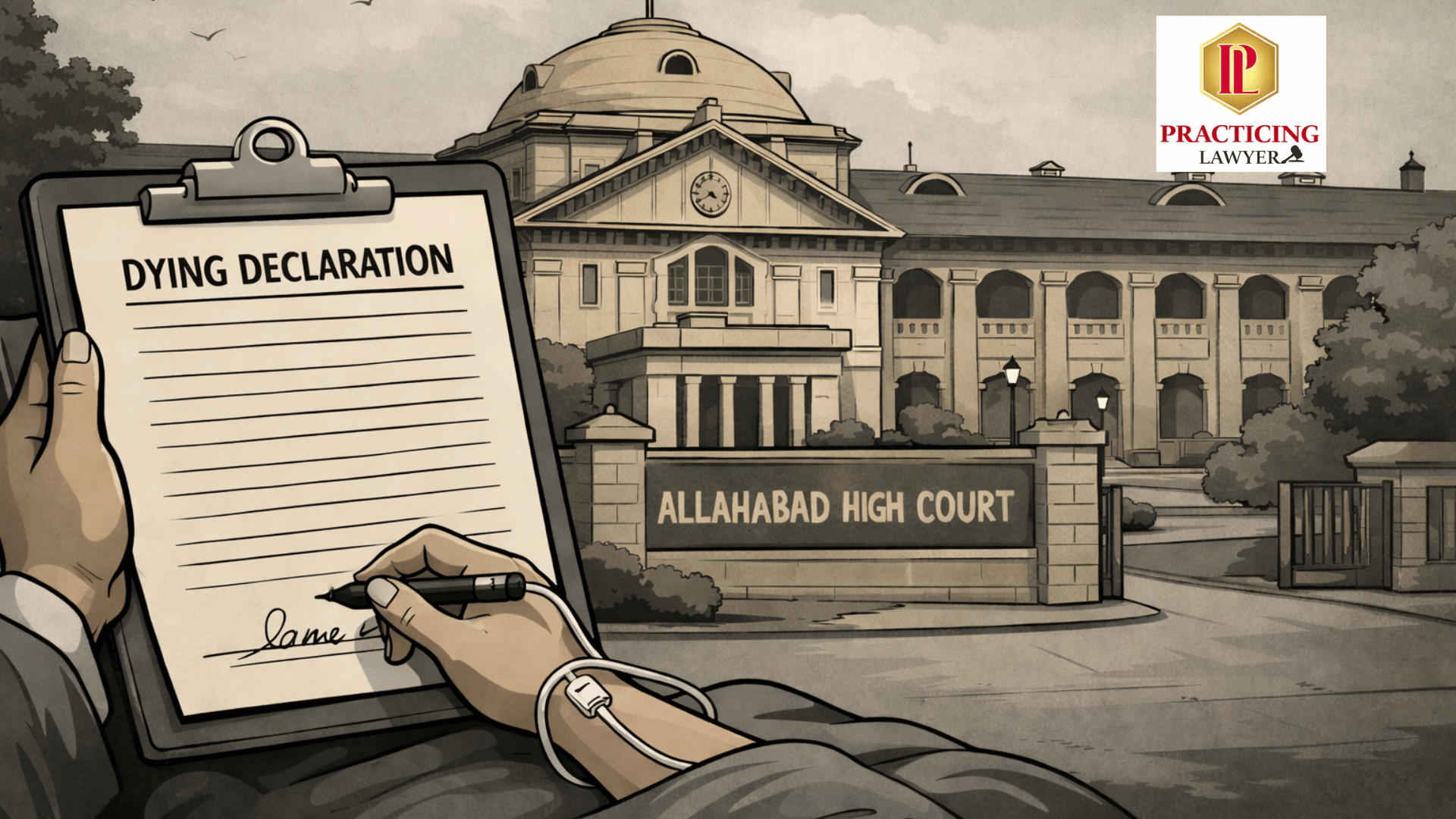
Recently, the Allahabad High Court affirmed the life sentence of a man convicted of burning a 16-year-old schoolgirl alive, firmly rejecting an orchestrated defense that attempted to exploit confusion over his name.
The ruling serves as a stern reminder that a credible, albeit brief, dying declaration is fully capable of sustaining a conviction, even when key family witnesses turn hostile.
The Court pointed out that,
“The maxim ‘falsus in uno, falsus in omnibus’ i.e., ‘false in one thing, false in everything’, is not applicable to our criminal justice system. It is for the Court to distinguish the wheat from the chaff while dealing with the deposition of a hostile witness.”
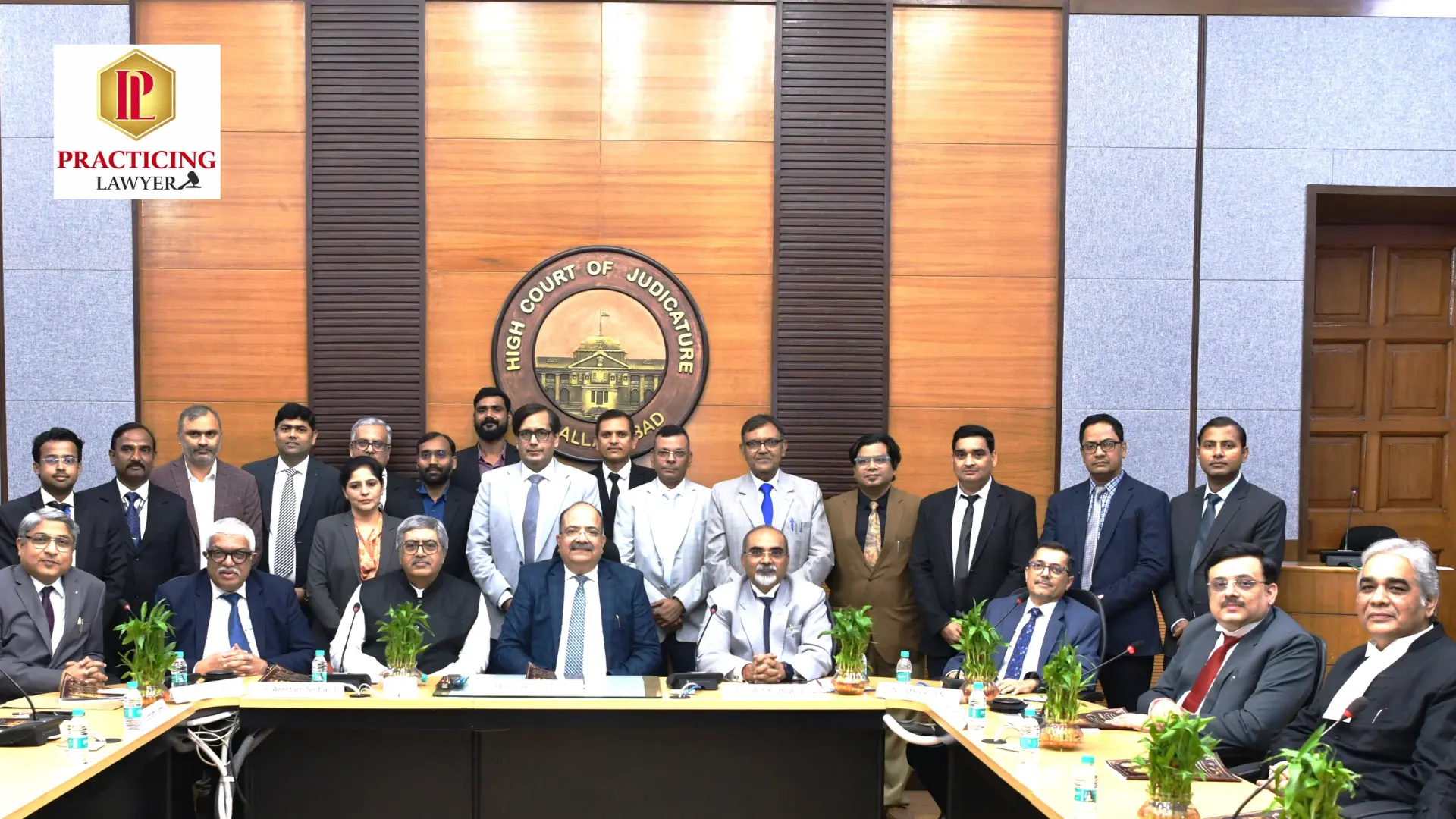
The judgment was delivered by a Division Bench comprising Justice Salil Kumar Rai and Justice Dr. Ajay Kumar-II. They were deciding a Criminal Appeal filed by the appellant, Ashiq, against the State of U.P.
The tragic events unfolded in July 2008 when a Class IX student was set ablaze on her rooftop. She had been continuously blackmailed by the appellant and his associate over a photograph taken at a local fair.
Sustaining extensive superficial to deep burn injuries, the young girl was rushed to the hospital. Shortly before succumbing to the 90% burns, she provided a clear dying declaration to an Additional City Magistrate, naming her neighbor “Ashish” as the primary assailant.
However, the trial became a battlefield when the victim’s own father and uncle took the stand. More than six months after their initial testimonies, the family members flipped the narrative, introducing a sudden claim that the real culprit was actually a Muslim boy from a different locality, also named Ashiq.
In this backdrop, the principal issues before the Court were whether the Ashiq named in the initial police report and the Ashish named in the dying declaration were the same person, and whether the victim’s brief dying declaration could be completely trusted.
Upon examining the record, the High Court systematically dismantled the defense’s strategy.
Relying on the Supreme Court’s ruling in K.P. Tamilmaran vs. The State Rep. by Deputy Superintendent, 2025 INSC 576 / 2025 SCC OnLine SC 958, the Bench observed that the evidence of a hostile witness cannot simply be washed off the record entirely.
The Court highlighted that the appellant’s own father had previously submitted an affidavit confirming his son was known by both names, Ashiq and Ashish.
The initial written report specifically identified the accused as the brother of the victim’s friend, cementing his true identity. Drawing heavily on major rulings like Laxman vs. State of Maharashtra (2002) 6 SCC 710 and Paniben vs. State of Gujarat (1992) 2 SCC 474, the High Court validated the dying declaration.
The Bench noted that a dying declaration does not need to be in a question-answer format to carry evidentiary weight. Because a qualified doctor had certified the victim’s mental fitness both before and after she spoke, her brief but precise statement stood as an unalloyed truth.
Towards the conclusion, the Court expressed deep revulsion at the nature of the crime, observing that the victim was merely a minor school-going girl.
The Bench remarked that setting a person on fire is a “gruesome act” and perpetrators cannot claim they “did not act in a cruel and unusual manner.”
The Court ruled that,
“It is a case of burning a person alive and therefore, it is the duty of the Court to deal with it in most severe and strict manner and award the maximum penalty prescribed by the law in order that it may operate as a deterrent to other persons from committing such heinous crimes…”
Because the evidence clearly demonstrated the appellant’s intent to cause death, the Court refused to show any leniency.
Accordingly, the High Court dismissed the instant appeal and firmly upheld the trial court’s order of life imprisonment and a fine of Rs. 20,000.
The Bench also directed the State Government to review the convict’s case for potential remission under existing policies, noting he has spent over 17 years, 3 months, and 15 days behind bars without remission.
Case: Ashiq vs State of U.P.
Case No: Criminal Appeal No. – 1924 of 2013
Date of Order: 15.04.2026
Status: Dismissed