The Allahabad High Court has noted that the purpose of a government welfare scheme cannot be allowed to suffer because of contractual disagreements between the state and an insurance company.
It ruled that once the competent authority has recognised a claimant as eligible for compensation under the Mukhyamantri Kisan Evam Sarvhit Bima Yojna, the insurer cannot approach the High Court under Article 226 of the Constitution to block the payment by citing conditions contained in its Memorandum of Understanding (MoU) with the State Government.
The bench ruled that,
“The Mukhyamantri Kisan Evam Sarvhit Bima Yojna is not an ordinary commercial insurance arrangement between private parties. The Scheme has been framed by the State Government as a welfare and social security measure intended to provide immediate financial assistance to economically vulnerable families, including poor farmers and persons engaged in allied occupations, upon accidental death or disability of the sole earning member of the family.”
According to the Court, permitting such challenges would convert writ jurisdiction into a forum for settling contractual disputes, while delaying financial relief meant for bereaved families.
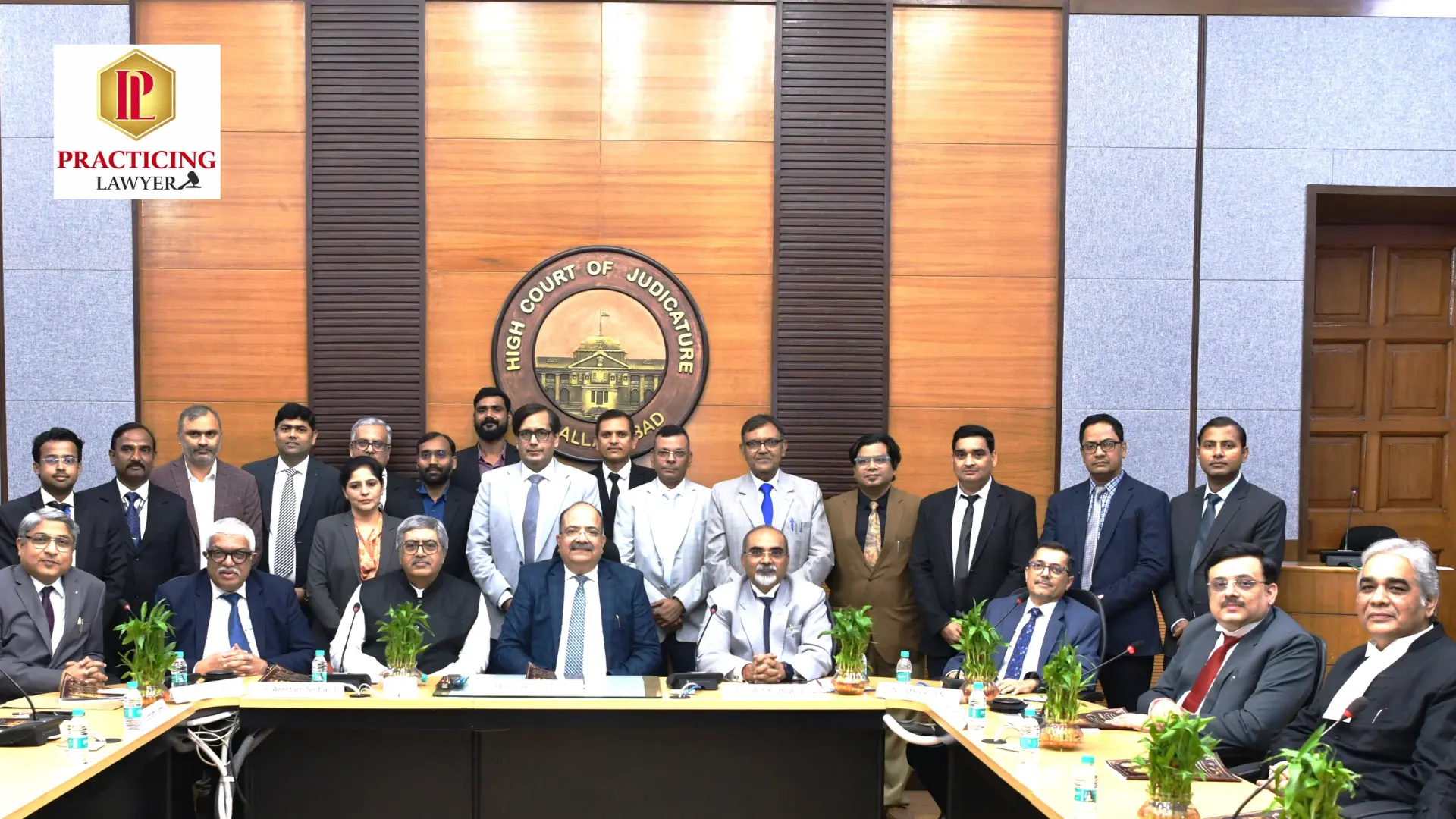
The judgment was delivered by a Division Bench of Justice Saral Srivastava and Justice Garima Prashad, which dismissed a petition filed by The Oriental Insurance Company Limited.
The writ petition arose from an order passed by the District Magistrate, Kanpur Nagar, on November 29, 2025, awarding compensation of ₹5 lakh to Smt. Rachna Singh under the Mukhyamantri Kisan Evam Sarvhit Bima Yojna after her husband, Bhanu Pratap Singh, died in a road accident. The Oriental Insurance Company Limited sought to have that order set aside.
Arguing its case, the insurer maintained that the compensation claim had been filed beyond the period prescribed under the scheme and that the District Magistrate had exceeded the limits of the contractual arrangement governing the scheme.
The Bench, however, found no merit in the submission. It observed that beneficiaries derive their rights from the welfare scheme framed by the government and are not signatories to the MoU executed between the insurer and the state government.
Any dispute arising out of that agreement, the Court said, cannot be used to defeat or postpone the rights of a beneficiary.
The Bench also warned against the larger consequences of entertaining such petitions. Families that have already suffered the loss of their only earning member should not be compelled to defend constitutional proceedings simply because the insurer disputes its contractual obligations with the state government.
The Court observed that,
“Welfare compensation intended for immediate financial relief cannot be permitted to be indefinitely obstructed until the Insurance Company is fully satisfied regarding every contractual or procedural aspect of its arrangement with the Government.”
The Bench said the record did not disclose any jurisdictional defect, perversity, or apparent illegality in the order passed by the District Magistrate.
Having concluded that the claim was maintainable and that the beneficiary qualified for compensation, the competent authority had rightly proceeded to grant the relief. In these circumstances, no interference under Article 226 was warranted.
The writ petition was accordingly dismissed. The Court directed the Oriental Insurance Company Limited to release the compensation of ₹5 lakh to Smt. Rachna Singh within three months.
It nevertheless clarified that if the insurer believes it has any contractual grievances arising from the MoU, it remains free to pursue the remedies available before the appropriate civil, commercial, arbitral or any other competent forum.
Case: The Oriental Insurance Company Limited vs Smt Rachna Singh and 2 others
Case No: WRIT C No. – 16530 of 2026
Date of Order: 31.07.2026
Status: Dismissed