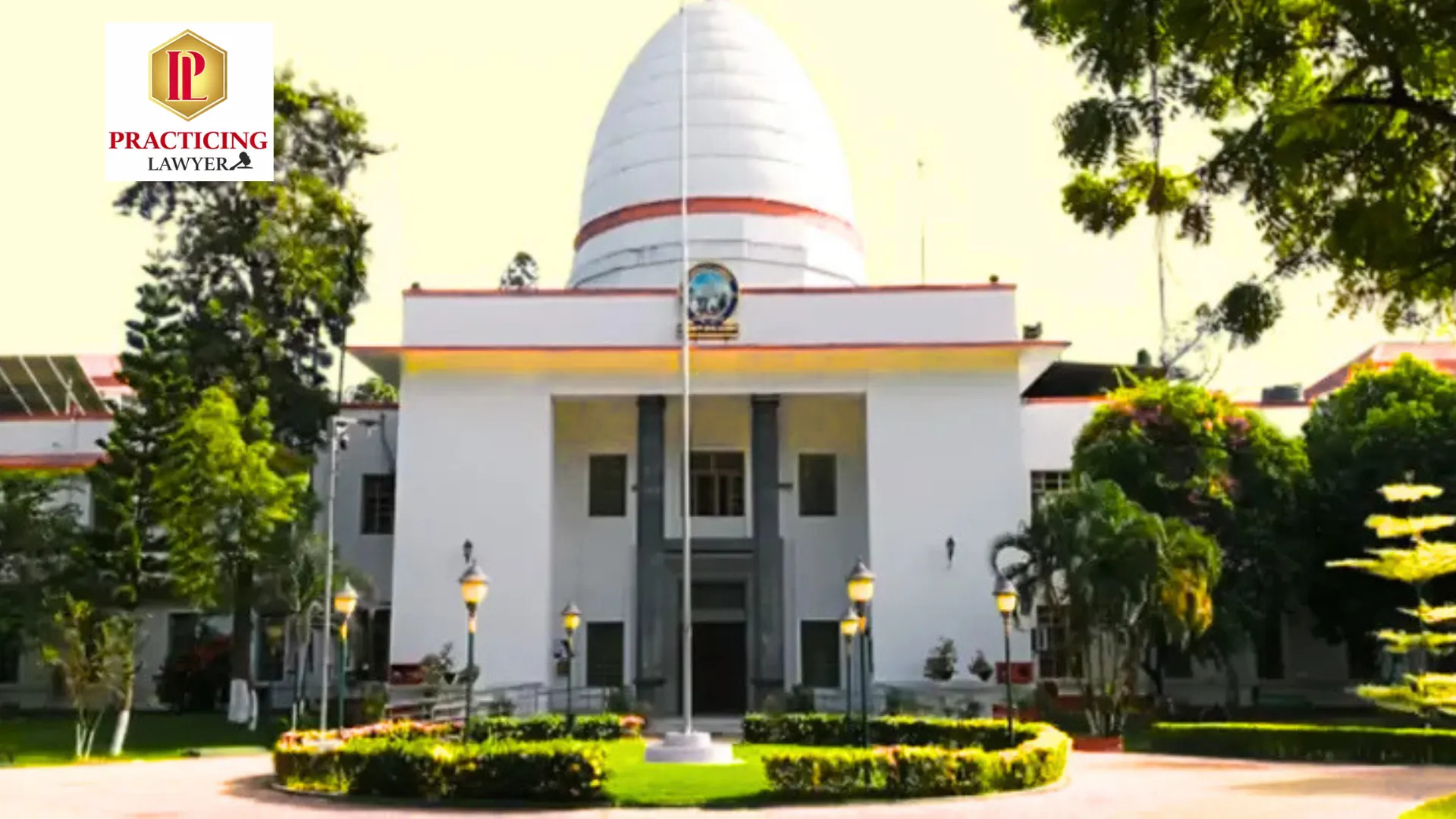
The Gauhati High Court has granted bail to Amritprava Mahanta, one of the seven accused in the alleged conspiracy to murder Assamese singer Zubeen Garg, finding that the material examined so far does not disclose a prima facie case against her.
A single bench of Justice Pranjal Das observed that “it would be a travesty of justice to deny her bail at this stage, especially when she has already undergone undertrial detention for almost a year now.”
The court added that “A court has to be conscious of society’s sense of justice, but cannot be captive to it.”
The order was passed on October 9, 2026, on Mahanta’s bail application.
She is accused No. 4 in the case and faces charges under Sections 3(6), 3(7), 3(8), 61(2), 103(1) and 238 of the Bharatiya Nyaya Sanhita (BNS).
Read also: Supreme Court Directs Centre to Form Committee on Pharma Marketing Practices
The case was registered at the CID Police Station in Guwahati after complaints alleged that Garg had been murdered during his visit to Singapore.
Garg died in Singapore on September 19, 2025, during the trip to attend a music concert. Following his death, complaints were lodged at several police stations in Assam.
One complaint, filed in Morigaon, alleged that Shyamkanu Mahanta, Siddhartha Sharma and others had taken the singer to Singapore and murdered him there.
The investigation was later handed over to the Assam CID, which constituted a Special Investigation Team (SIT). A chargesheet was subsequently filed against seven accused.
According to the prosecution, Mahanta and three other accused had conspired to kill Garg.
The alleged plan involved taking him to Singapore for a cultural festival, making him consume excessive alcohol and encouraging him to swim in the sea during a yacht outing without a life jacket.
The prosecution claimed that Garg got into difficulty while swimming, drowned and was later declared dead at Singapore General Hospital.
After examining the investigation records and the evidence presented during the trial, the High Court found no material to support the allegation that Mahanta had supplied or administered alcohol to Garg.
The court considered statements of more than 250 witnesses recorded during the investigation, the documents accompanying the chargesheet and the testimony of 124 prosecution witnesses examined at trial. Of these 124 witnesses, 118 had made no statement implicating Mahanta in the alleged acts.
The court also found the testimony of the witnesses who had referred to the allegation insufficient to establish her involvement.
One witness admitted during cross-examination that his claim that Mahanta had given alcohol to Garg was based on the chargesheet and that he had never visited Singapore.
Another acknowledged that he had no personal knowledge of the incident and had relied on media reports.
The prosecution also relied on a statement made during the investigation by witness Rup Kamal Kalita. According to the statement, Mahanta had told him that Garg had been given whisky before boarding the yacht and had consumed alcohol during the journey.
The court noted that the statement appeared to suggest that she was speaking about alcohol already given to Garg, rather than establishing the prosecution’s allegation that she was responsible for making him consume it.
Justice Das further held that a statement made by an accused to the police could not be relied upon against her at the bail stage.
Referring to the Supreme Court’s decision in P. Krishna Mohan Reddy v. State of Andhra Pradesh, reported in 2025 SCC OnLine SC 1157 the court explained that statements made by accused persons to the police stand on a different footing from witness statements and cannot be treated as evidence establishing the allegations against them.
Read also: Allahabad High Court Crosses Milestone of 1 Lakh Judgments Translated Into Hindi
On the charge of conspiracy, the court said the prosecution was required to show an agreement between the accused to pursue an unlawful objective.
Suspicion alone, or an inference unsupported by material on record, could not establish such an agreement.
The court found no material in the investigation records or the evidence recorded so far to show that Mahanta had performed any overt or covert act in furtherance of the alleged conspiracy.
It also found no material linking her to the organisation of the Singapore trip or yacht outing, changes in accommodation arrangements, or any attempt to encourage Garg to swim without a life jacket.
The court made it clear that its observations were limited to the bail application and would not affect the determination of the case at trial.
The court reiterated that pre-trial detention should not become a form of punishment.
The bench stressed the need for “effective investigation, minimum arrests, minimum pre-trial and under-trial detention, strong prosecution and healthy conviction rate in real crimes.”
In considering the application, the court also took note of Mahanta’s gender, the absence of previous criminal antecedents, the progress of the trial and the period she had spent in custody following her arrest on October 3, 2025.
It referred to Section 480(1) of the Bharatiya Nagarik Suraksha Sanhita (BNSS), which allows a court to grant bail to a woman even in cases involving offences punishable with death or imprisonment for life, depending on the circumstances.
The High Court accordingly allowed the bail application and directed Mahanta’s release on a personal bond of Rs. 50,000 with two sureties of the like amount, to the satisfaction of the trial court.
She must cooperate with the remaining trial, refrain from tampering with evidence or influencing witnesses, take precautions for her safety and obtain the trial court’s permission before travelling abroad.
The court said any breach of these conditions could result in cancellation of bail.
Case: Amritprava Mahanta & Ors. vs The State of Assam.
Case No: Bail Appln./2212/2026
Date of Order: 09.10.2026
Status: Allowed