The Allahabad High Court has clarified the authority competent to cancel the registration of a hospital, holding that under the Clinical Establishments Act, a hospital’s registration cannot be cancelled without first issuing a mandatory three-month notice, and that the Chief Medical Officer (CMO) alone is not empowered to pass such an order.
The Court emphasized that “cancellation of, even provisional certificate, must be by the authority.” It observed that sealing a hospital and cancelling its registration without following the procedure prescribed by law and without the involvement of the statutory “authority” amounts to an action taken without jurisdiction.
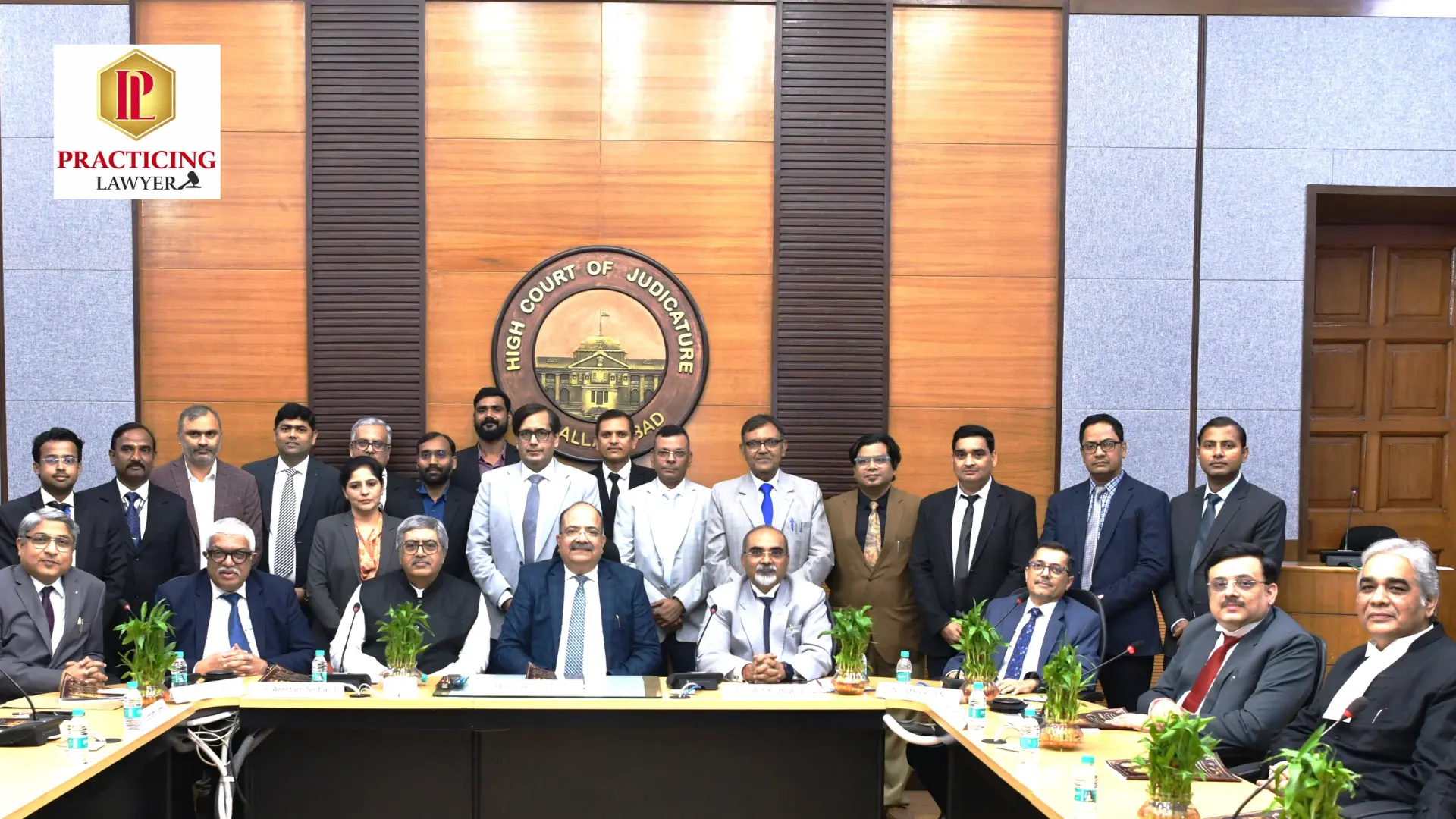
The said order was passed by a Division Bench comprising Justice Arindam Sinha and Justice Satyaveer Singh while allowing a petition filed by Khushi Hospital and another.
According to the facts, the petitioners, who operate the hospital, held a provisional registration under the Clinical Establishments (Registration and Regulation) Act, 2010.
In the instant petition, they had challenged the sealing order dated March 10, 2026, and the registration cancellation order dated March 18, 2026.
Read also: Mere Allegation of Cheque Misuse Not Enough to Deny Interim Compensation u/s 143-A NI Act
The counsel for the petitioner argued that under section 32 of the Clinical Establishments (Registration and Regulation) Act, 2010, cancellation of registration can only be done by the authority.
Counsel further submitted that the definition of authority is provided by clause (a) in section 2.
During the hearing of the case, counsel relied on section 10 of the above Act, which provides for the authority to have the District Collector as Chairperson, the District Health Officer as convenor, and also three members possessing qualifications, to be appointed on such terms and conditions as may be prescribed.
In such circumstances, the Chief Medical Officer cannot act as the authority to exercise the power of cancellation of the registration certificate.
After examining the Act, the Rules, and the relevant statutory provisions, the Court found that Rule 14A of the Clinical Establishments Rules, 2016, entrusts the authority with the functions of granting, renewing, suspending, and cancelling registrations of any clinical
establishment.
The Bench further observed that Section 10(2) merely permits the CMO to exercise certain powers of the authority for limited purposes and does not elevate the CMO to the status of the authority itself.
The Court specifically noted that neither Section 32 nor any other provision of the Act equates the authority with the CMO.
The Court further recorded:
“On query we have ascertained that there is no notice issued by the authority for cancellation. Section 32 provides for three months’ notice in the matter of cancellation of registration certificate. It is only thereafter, on due cancellation, there can be reasons recorded in writing for immediately restraining the clinical establishment from carrying on, if there is imminent danger to the health and safety of patients.”
Accordingly, the Court held that no notice for cancellation had been issued by the competent authority, despite the statutory requirement of a three-month notice under Section 32.
The Court noted that only after a valid cancellation by the authority, for recorded reasons and in cases involving an imminent threat to patients’ health and safety, can it immediately restrain a clinical establishment from functioning.
In conclusion, the High Court directed the competent authority to proceed afresh in accordance with law and to issue the requisite notice, thereby providing the hospital administration an opportunity to submit its response before any further action is taken.
Accordingly, the Court set aside and quashed the impugned orders of sealing and cancellation of registration.
Case: Khushi Hospital And Another vs State Of U.P. And 3 Others
Case No: Writ – C No. – 12569 of 2026
Date of Order: 21.05.2026
Status: Allowed