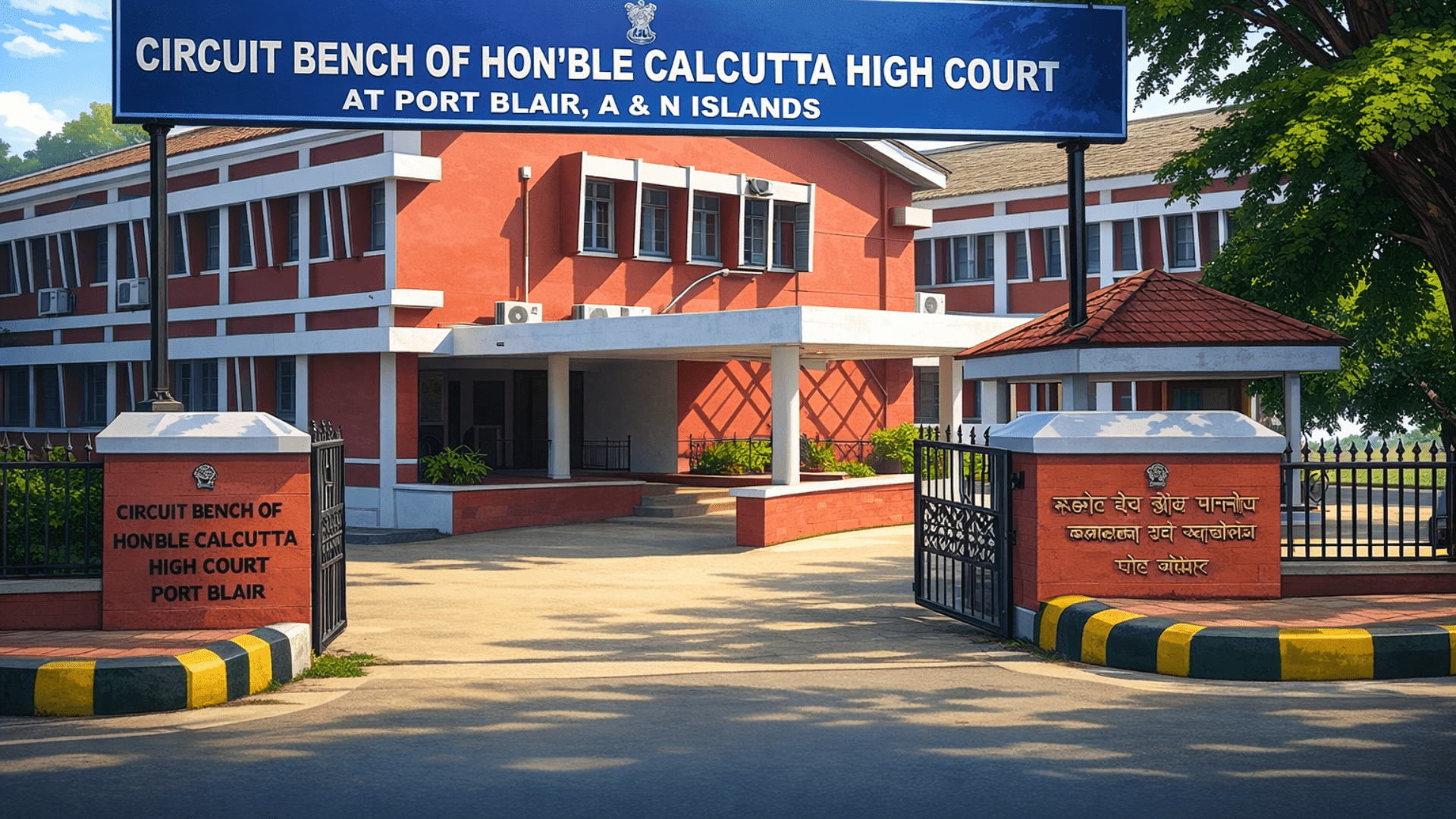
The Port Blair Circuit Bench of the Calcutta High Court, while setting aside an order of the Sessions Court discharging the in-laws in a case relating to dowry harassment and suicide, observed that while society celebrates the success of daughters in various fields, many girls continue to lose their lives prematurely under the burden of regressive practices such as dowry.
The Court remarked that such a situation is a matter of serious concern for a civilized society. Referring to lines quoted from a book by Justice V.R. Krishna Iyer, the Court observed that,
“No society is free until the last damsel in distress is free.”
While reflecting on the present social condition of women and girl children, the Court made the following significant observation that,
“Before parting, I should say that although we are happy and indeed, rejoicing that our daughters have won the World Cup in Cricket recently, and they are also making remarkable achievements in different fields, sectors etc., the passing away of Rudrika at the age of one and half years reminds us that still we have to go a long way to achieve complete equality for our girl children……….”
These observations were made by the Single Bench of Justice Apurba Sinha Ray while disposing of a Criminal Revision petition filed by the deceased’s father, Jagjit Kumar.
According to the case record, Bhawna Sharma and Neeraj Sharma were married in 2018. In April 2018, they went to Kerala for their honeymoon and thereafter shifted to the Andaman and Nicobar Islands following the husband’s transfer.
After living there for some months, the deceased went to her matrimonial home in Pathankot, where she was allegedly subjected to harassment for an additional dowry demand of ₹5 lakh in cash. Subsequently, she returned to her parental home in Punjab, where she gave birth to a girl child.
The materials on record and witness statements indicated that the deceased’s mother-in-law, Praveen Kumari, allegedly exerted mental pressure on her to give birth to a male child and had also demanded ₹5 lakh in anticipation of the possibility of the birth of a girl.
After the birth of the daughter, Rudrika, and the non-fulfilment of the demand, the harassment allegedly intensified, and in May 2020 the deceased was turned out of her matrimonial home.
In June 2021, the husband took her back to the Andaman Islands. In July 2021, it was reported that the deceased had allegedly strangulated her one-and-a-half-year-old daughter and thereafter died by suicide by hanging. At the time of the incident, the husband was at his office and the room was found locked from inside.
An initial complaint was lodged by a neighbour against an unknown person under Section 302 IPC. Later, on 31 July 2021, the deceased’s father lodged an FIR at Pahargaon Police Station against the husband and four members of the matrimonial family-mother-in-law, father-in-law, brother-in-law and sister-in-law, alleging dowry demand, mental and physical cruelty, and harassment.
After investigation, a charge-sheet was filed against the husband and the four in-laws. However, the Sessions Court, Port Blair, discharged the in-laws-Vinay Sharma, Praveen Kumari, Aman Sharma and Shashikala-holding that the evidence was insufficient and concluding that sufficient material was available only against the husband for framing charges under the relevant provisions of the IPC.
Disappointed with the aforementioned order, the revisionist went to the Calcutta High Court, arguing that the Trial Court had discharged the in-laws in a grave legal error and had neglected to adequately consider the evidence on file.
Counsel for the revisionist argued that the mental condition of the deceased reflected the severe physical and psychological cruelty she had allegedly suffered, which may have driven her to take the extreme step of killing her infant and ending her own life.
It was also submitted that she was repeatedly taunted for not giving birth to a male child and remained under extreme stress and pressure.
On the other hand, counsel for the accused/ respondents contended that none of the accused were present at the place of occurrence at the relevant time and that apart from ordinary matrimonial discord, there was nothing substantial against them.
It was further argued that the couple had a serious quarrel shortly before the incident, and that the act of killing an infant indicated extreme cruelty on the part of the deceased. Additionally, it was implied that the deceased had a suspicious disposition.
Following a thorough analysis of the facts, the Court came to the conclusion that the dowry demand, the desire for a male child, and the birth of a girl had caused significant conflict within the family.
Rejecting the argument regarding the alleged cruel nature of the deceased, the Court observed:
“Argument was advanced regarding the cruel nature of the deceased Bhawna who strangulated her own child before her suicide. But whether it was her cruel nature or the compulsion for not having a male child beyond the wish of the God swayed her decision ultimately to kill not only herself but her girl child who was looked down upon, is the subject matter of evidence.”
The Court further underlined that despite the achievements of girls in various fields, continuing incidents of discrimination demonstrate that society still has a long way to go in achieving real equality for girl children.
Accordingly, the High Court set aside the discharge order of the Sessions Court and directed the accused persons to appear before the trial court within four weeks.
The Court observed that they may be granted bail in accordance with law and that charges be framed thereafter under appropriate provisions.
Case: Jagjit Kumar vs The State & Others
Date of Order: 06.02.2026
See the Order: Jagjit Kumar vs The State & Others