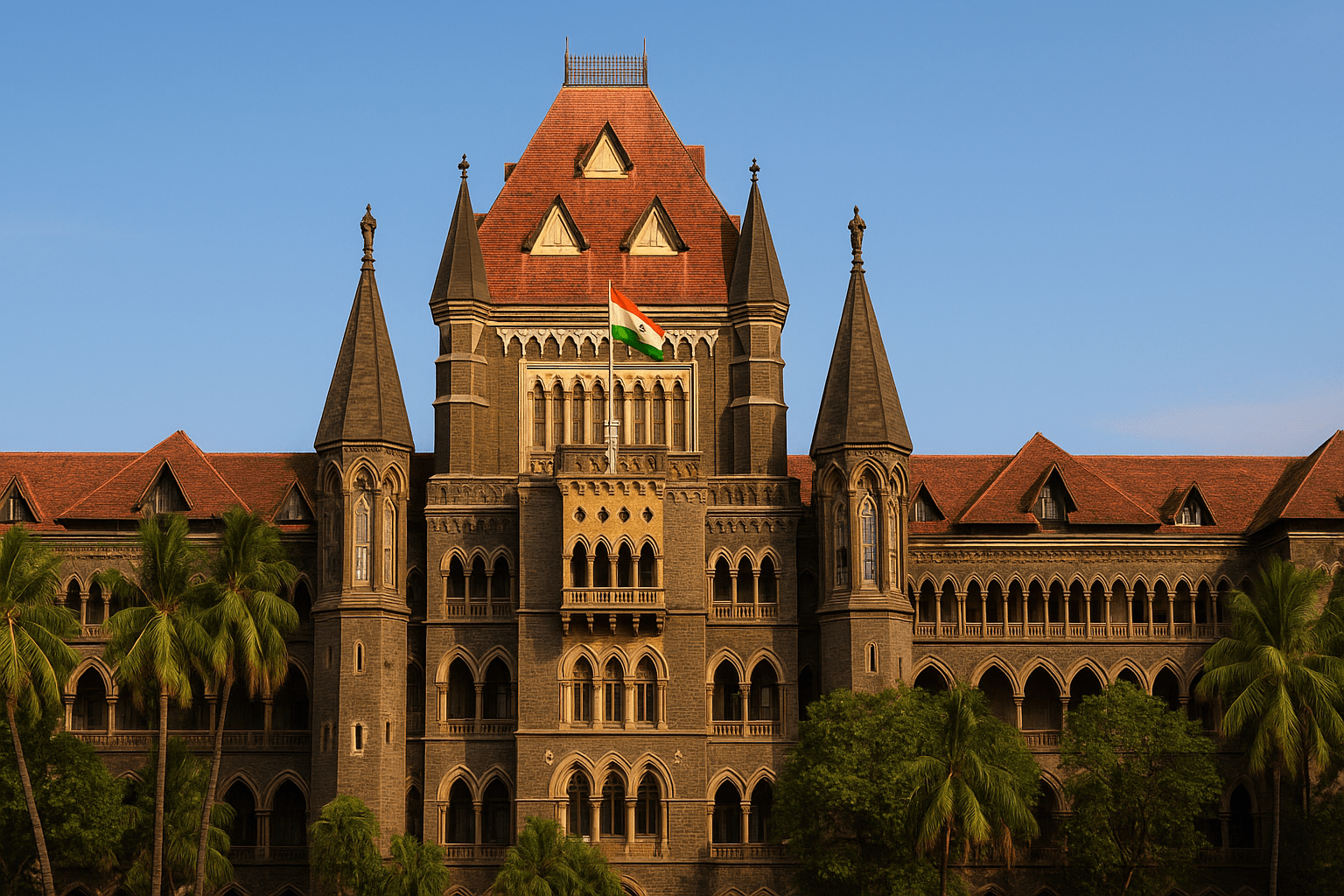
A new Public Interest Litigation has been filed before the Bombay High Court, Bombay, questioning the Maharashtra government’s long-standing indifference towards victims of human rights violations. Practicing Advocate Satyam Atul Surana who has filed the instant petition as the petitioner in person, describes the issue as a “serious failure & travesty of justice,” pointing to the State’s repeated neglect of the Maharashtra State Human Rights Commission’s recommendations.
The instant matter has been listed for hearing on 18 November 2025 (Tuesday) before a Division Bench comprising Chief Justice Shri Chandrashekhar and Justice Gautam Ankhad.
Information obtained by the petitioner through an RTI application reveals a troubling pattern. Between 2013 and 2025, the MSHRC issued 180 recommendations. Yet, government action was taken in only 44 instances—barely a quarter of the total. The remaining 136 recommendations, many of which involve compensation amounting to more than ₹3.39 crore, continue to languish without explanation. According to the writ petitioner, the prolonged silence not only denies redress to victims but also deepens their suffering, effectively exposing them to further violations of their rights.
In the petition, Surana has asked the Court to clarify that recommendations issued under Section 18(e) of the Protection of Human Rights Act, 1993, are binding on the State unless they are challenged through the proper legal route. Treating them as advisory, he argues, has allowed the government to avoid accountability for years.
He has further pointed to recent judgments from the Supreme Court and several High Courts, which emphasize that such recommendations cannot be brushed aside. These orders, passed after a full inquiry, carry the weight of reasoned quasi-judicial findings. Ignoring them, he submits, not only weakens the rule of law but also strikes at the heart of the constitutional protections guaranteed to citizens.
The petition is expected to be taken up tomorrow, and its outcome may have a significant bearing on how human rights bodies function across the country.