The Supreme Court held that families alleging grave harm during a State-led immunisation programme should not be left without an accessible mechanism of redress.
The Apex Court has also directed the Union Government to frame a no-fault compensation policy for cases involving serious adverse events following COVID-19 vaccination.
The said judgment was given by a Division Bench comprising Justice Vikram Nath and Justice Sandeep Mehta while hearing the writ petition filed by Rachana Gangu & Anr.
In the instant matter, the Court was to examine whether the absence of a uniform compensation policy for deaths or injuries following COVID-19 vaccination violates the Right to Life as guaranteed under the Constitution, and if so, whether the respondents can be directed to frame such a policy.
In this regard, the Court observed that,
“The Constitution does not conceive of the State as a distant spectator to human suffering, but as an active guardian of welfare and dignity. The Directive Principles of State Policy illuminate this vision with clarity. Article 41 speaks of public assistance in cases of sickness and disablement, within the limits of State’s capacity.”
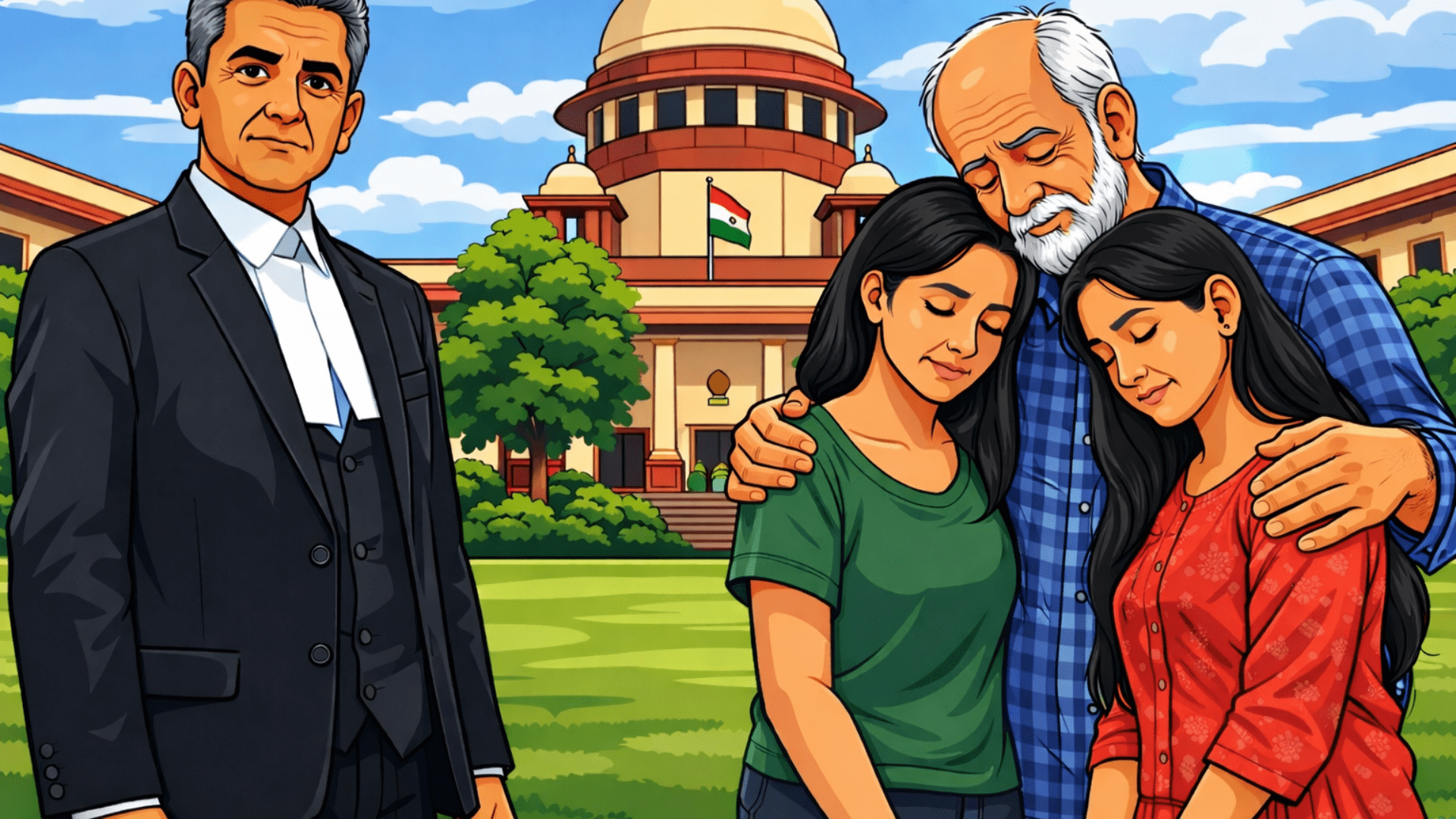
According to the facts of the case, in the leading petition which, was filed by parents whose two daughters allegedly died after receiving the COVID-19 vaccination. The parents’ younger daughter, aged about 18 years, received the first dose on 29.05.2021 and she was diagnosed with Cerebral Venous Sinus Thrombosis (CVST) and later on died on 19.06.2021. The elder daughter, aged about 20 years, received the first dose on 08.06.2021 and she developed Multisystem Inflammatory Syndrome and passed away on 10.07.2021.
Regarding the same matter, several petitions were also filed before the Kerala High Court, where families claimed deaths or severe medical conditions following vaccination. In one such case, the High Court issued an interim direction asking authorities to frame a policy for identifying adverse events following immunisation (AEFI) and compensating affected families.
In the petitions, appellants seek constitution of medical board for inquring into such deaths, compensation, and formulation of protocols for early detection and treatment of adverse events following immunization.
The Court noted that,
“The grievance here is much deeper, namely, that families alleging grave harm during the course of State-led vaccination program are left without any uniform remedy to seek redressal.”
During the hearing, counsel for the petitioners argued that Union Government failed to ensure transparency, informed consent and proper post vaccination surveillance and deaths caused after administration of COVID-19 vaccines which shows structural deficiencies in India’s vaccine governance system.
It was further submitted that authorities imposed restrictions on travel and access to certain public spaces on unvaccinated individuals and thereby pressuring the citizens to undergo vaccination irrespective of their autonomy or informed consent.
The Court ruled that,
“However, the Constitution does not view the right to life solely through the lens of fault. Article 21 also embodies a positive obligation of the State to ensure that where grave harm is alleged to have occurred in the course of a Stateled public health intervention, affected families are not left without any accessible mechanism of redress. The absence of such an institutional framework raises constitutional concerns which warrant a calibrated response.”
It was also contended that Government, despite possessing material facts relevant to decision-making, failed to publish causality assessments or maintain a publicly accessible portal, which was contary to the ruling by the Supreme Court in Jacob Puliyel v. Union of India.
Besides the above contention, the counsel further alleged that the respondents did not adequately warn users, caregivers, and the medical community about known serious adverse effects, and that the statement of the Drug Controller General of India on 04.01.2021 describing the vaccines as ‘110% safe’ created a false sense of absolute safety.
The Bench clarified that,
“……the relationship between the individual and the State cannot be viewed through the prism of fault based liability. Where the State undertakes an intervention of this scale in discharging of its duty to protect public health, the right to health under Article 21 would automatically extend to a corresponding obligation of institutional support in cases of grave outcomes, no matter how rare they are.”
While on the other hand, the Union Government opposed the petitions by saying that COVID-19 vaccines were approved after rigorous regulatory scrutiny by expert bodies and that the approval process had already been upheld by the Supreme Court.
It was also argued that AEFI surveillance, monitoring, and investigation are conducted by expert-led State and National AEFI Committees, which undertake documentation, investigation, and causality assessment. Adverse events may be reported through the CoWIN portal or to the District Immunization Officer, and serious cases are examined by trained medical experts.
Counsel further stated that the Committee included specialists such as cardiologists, neurologists, and respiratory medicine specialists. Causality assessment reports are publicly available on the website of the Ministry of Health and Family Welfare, and that operational guidelines require beneficiaries to be informed of both benefits and risks, with informational posters displayed at vaccination centres nationwide.
Upon examining the material available on record, the Court noted that,
“It has come to our notice that extensive studies conducted by Indian Council of Medical Research (ICMR) and National Centre for Disease Control (NCDC) have affirmed that there is no direct link between the vaccines and sudden deaths caused thereafter. They have concluded that the vaccines are safe with extremely rare instances of side effects. This court accords due weight to such scientific findings.”
On a careful analysis of the record, the Court found that,
“The vaccination program undertaken during the pandemic was itself an expression of these constitutional commitments. The State went above and beyond in order to create a vaccination scheme and the same undoubtedly helped save many lives. But at the same time, as the government data itself suggests, it cannot be brushed aside that the same vaccines also led to loss of life.”
The Bench found merit in the submissions of the Union Government that a framework exists consisting of National and State AEFI Committees which investigate into the deaths and injuries caused after the administration of vaccines.
The Court declined the request to constitute an independent expert body to examine individual deaths.
Accordingly, the petitions and other connected matters are disposed of with certain directions to the Union Government.
Case: Rachna Gangu & Anr vs Union of India & Ors.
Date of Order: 10.03.2026