Introduction:
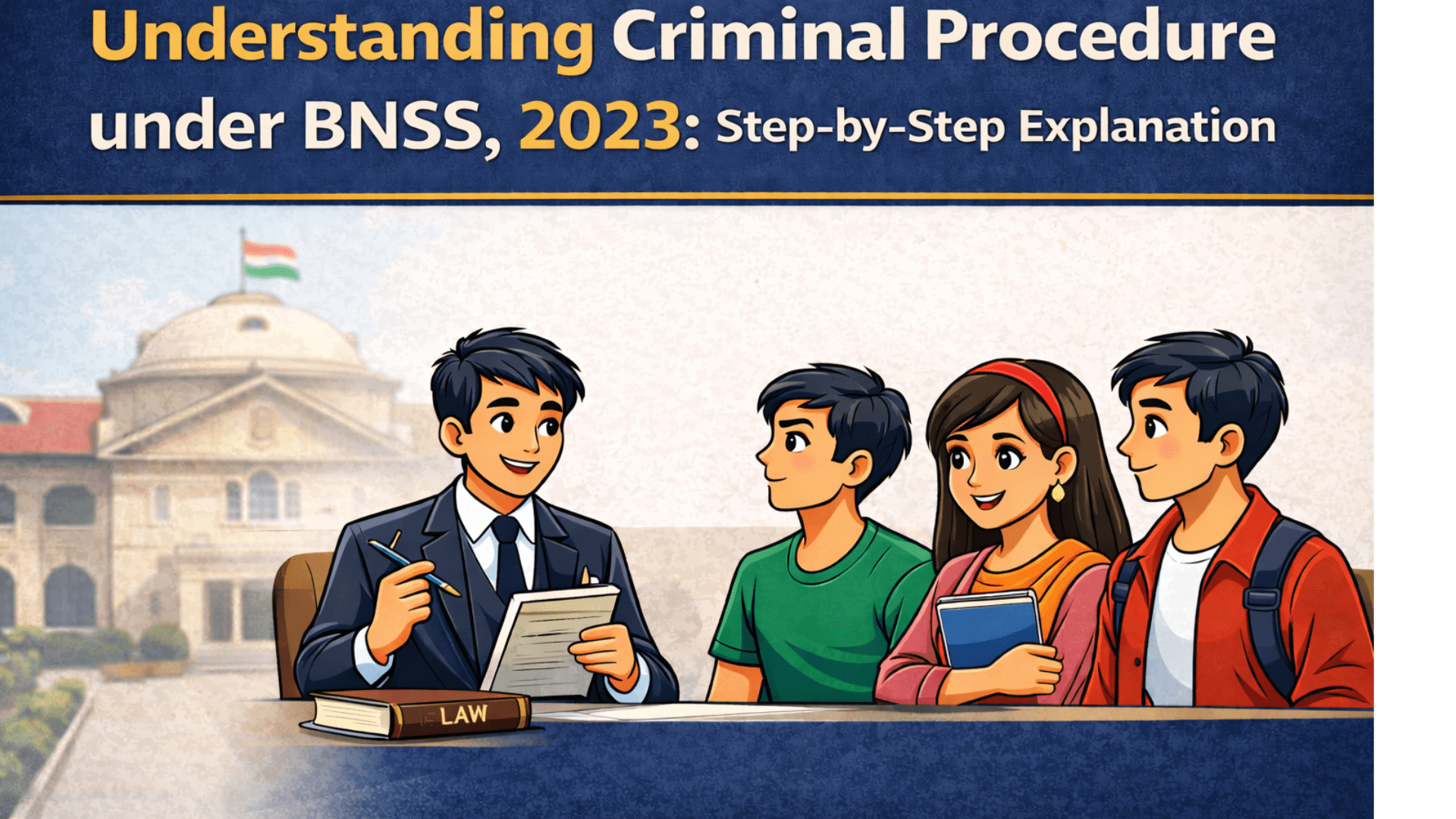
The criminal procedure system is now regulated by the Bharatiya Nagarik Suraksha Sanhita, 2023 (BNSS). It describes the steps undertaken once a crime is committed, starting with the reporting of the crime to the ultimate sentence and appeal before the concerned Court.
The case of a criminal does not initiate in court. It passes through various steps before dispensation of justice. The knowledge of these stages will aid in identifying clearly the way the criminal justice system operates.
Stage 1: Stage of Information of Offence
All criminal cases start when an individual reports to the authorities that a related crime has been committed.
This may happen through:
• FIR in grave (cognizable) crimes such as murder, rape, robbery.
• Complaint – minor (non-cognizable) offences.
This is the stage that launches the criminal law.
Stage 2: Registration of FIR
In case the offence is cognizable, the police are required to make an FIR.
The FIR is the official document of the crime and includes:
• Details of incident
• Names involved
• Date, time and place
It establishes the basis of research.
Stage 3: Investigation
Once the registration has been done by FIR police start the investigation to find out the truth.
This includes:
• Visiting the crime scene.
• Documenting witness testimonies.
• Collecting evidence.
• Medical and forensic Examination.
• Arrest of property or papers.
This is to ascertain whether the accused is really guilty.
Stage 4: Arrest
In case of a need, the accused may be arrested by the police.
Arrest may be:
• With warrant
Without serious offences warrant.
Safeguards include:
• Informing grounds of arrest
• Right to inform family
• Before Magistrate production in 24 hours.
Stage 5: Bail
Bail may be called by the accused.
Types include:
• Regular Bail – after arrest
Before arrest, the accused is entitled to the privilege of anticipatory bail.
• Default Bail – in case of delay in investigation.
Bail does not prevent cooperation with investigation although it protects personal liberty.
Stage 6: Filing of Charge-sheet
Following research, police present a document in court.
This may be:
• Charge-sheet- in case evidence is discovered.
• Closure Report – in case of insufficient evidence.
Stage 7 Cognizance by Magistrate
The Magistrate analyzes the report and evidence.
When contented, the court assumes cognizance, i.e. it formally acknowledges the offence and goes on.
Stage 8: Framing of Charges
The court finds out whether sufficient material exists to proceed.
If yes – Charges are framed
If no – Accused is discharged
The accused is required to defend against what the charges state.
Stage 9: Trial
Trial includes:
• Prosecution evidence presentation.
• Defence cross-examination.
• Statement of accused
• Defence evidence
It is at this point that evidence is put to the test of truth.
Stage 10: Final Arguments
The prosecution and the defence present their own version of the case and explain the evidence in the presence of the judge.
Stage 11: Judgment
The verdict of the court is as follows:
• Conviction
OR
• Acquittal
Stage 12: Sentencing
In case of conviction, the court will sentence one depending on the severity of the crime and situation.
Stage 13: Appeal
The wronged party can appeal the ruling to the higher courts like Sessions Court, High Court or Supreme Court.
Stage 14: Execution of Sentence
The latter step is to make sure that punishment (imprisonment, fine or compensation) is implemented.
Conclusion:
The BNSS makes the criminal procedure modern and introduces systematized procedures and protection. Knowledge of these phases assists in having a clear picture of how a complaint passes through the investigation, trial and ends in justice.
By,
Devanshi Singh
Advocate, High Court
Allahabad
Disclaimer:
This article is intended solely for academic and professional discussion. It does not constitute legal advice or a formal opinion. The views expressed are personal and based on the author’s understanding of the relevant statutory provisions, Recruitment law, rules and judicial precedents as on the date of writing. Readers are advised to consult the relevant statutory provisions and professional advisors before acting on the basis of the aforementioned article.