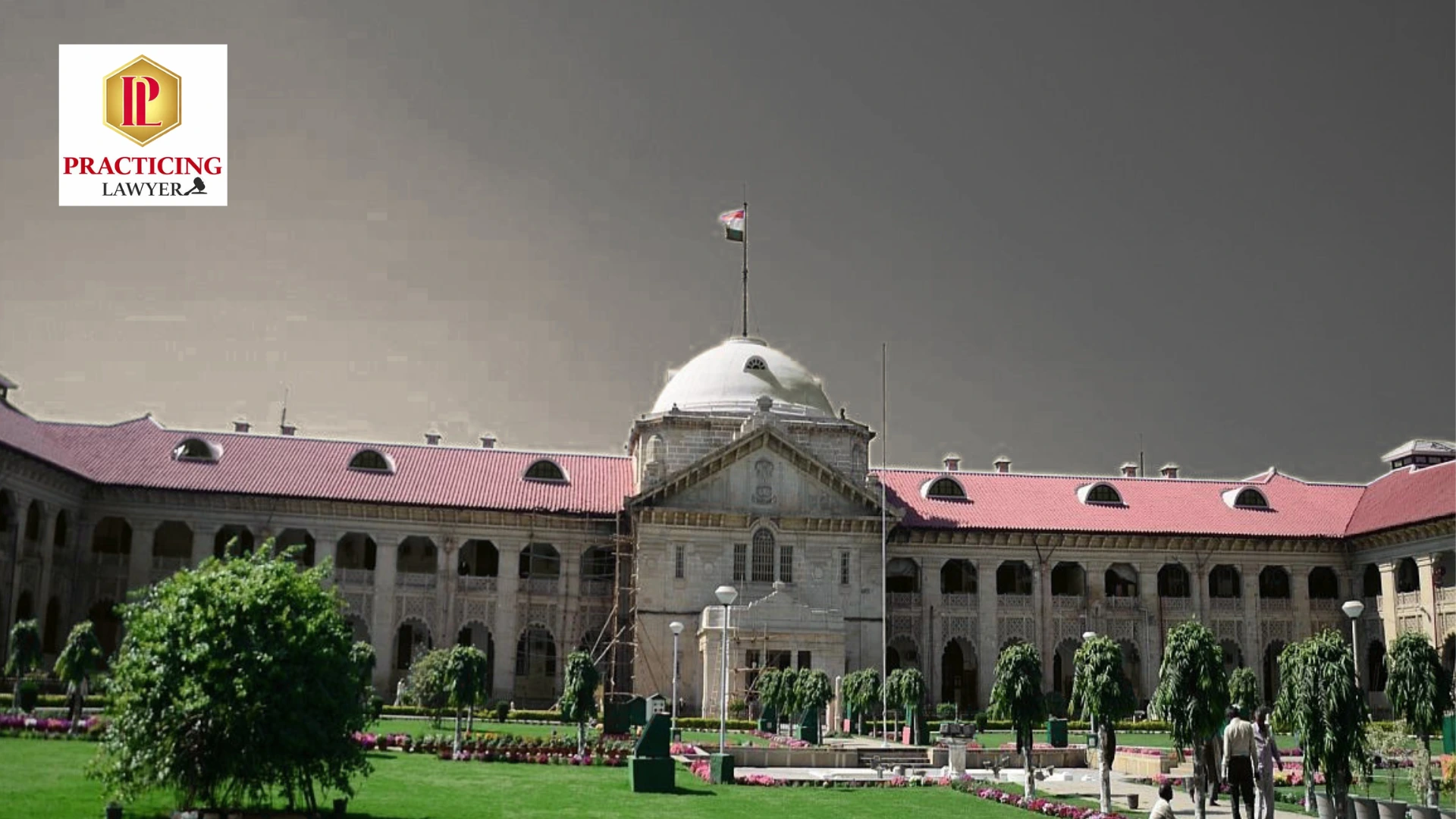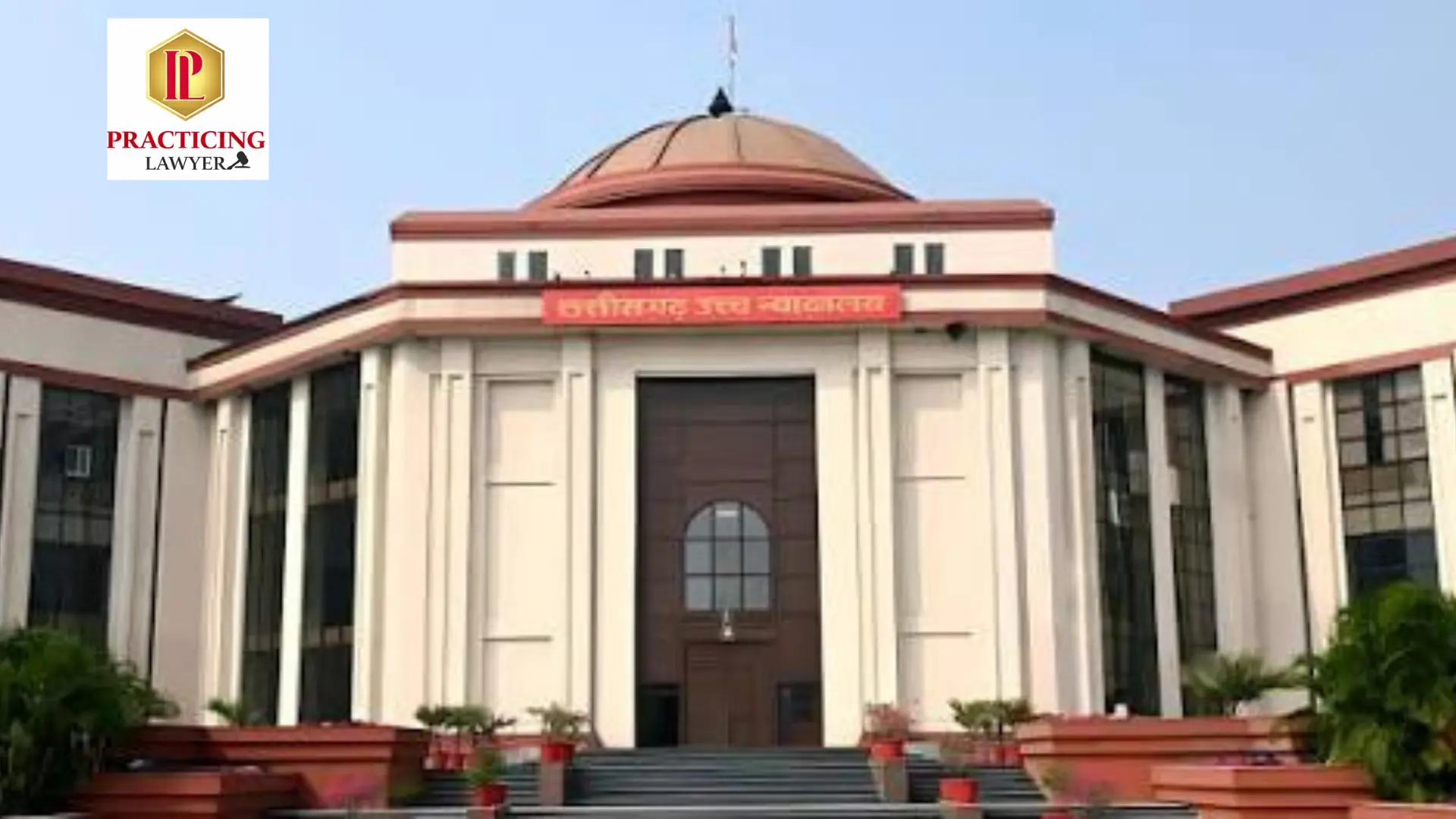
The Chhattisgarh High Court has rejected the regular bail application of former Chhattisgarh Public Service Commission (CGPSC) chairman Taman Singh Sonwani in a money laundering case linked to alleged irregularities in the state services examinations of 2020 and 2021.
The court held that the material collected by the Enforcement Directorate (ED) prima facie indicated his involvement in the alleged offence and that the statutory conditions for bail under the Prevention of Money Laundering Act (PMLA) were not satisfied.
The court observed that,
“The denial by the accused itself is not sufficient to consider prima facie that there is no mens rea of the applicant for the said offence under the PMLA 2002”.
Justice Bibhu Datta Guru passed the order on a regular bail application filed by 65-year-old applicant, who was arrested by the ED in July 2026 and is in judicial custody.
His bail application had earlier been rejected by the Special Court (PMLA), Raipur, on August 20, 2026.
⚖️ Get daily Supreme Court & High Court case summaries + Order (PDF download links on WhatsApp): Join Practicing Lawyer Channel
The court was considering his plea under Section 483 of the Bharatiya Nagarik Suraksha Sanhita, 2023, read with Section 45 of the PMLA, 2002.
In the instant case, there is an allegation of irregularities in the CGPSC examinations conducted in 2020 and 2021.
An FIR was registered by the Economic Offences Wing/Anti-Corruption Bureau, Raipur, on February 7, 2024, under Sections 120-B and 420 of the Indian Penal Code and Sections 7, 7A and 12 of the Prevention of Corruption Act.
The Central Bureau of Investigation subsequently registered a case against Sonwani and other accused persons and filed its charge-sheet on January 16, 2025, followed by supplementary charge-sheets on September 26 and December 31, 2025.
According to the ED, the alleged conspiracy involved manipulation of the recruitment process, leakage of examination question papers and the selection of favoured candidates.
The prosecution alleged that an amendment to the recruitment rules on July 14, 2021, deleted the word “nephew” from the definition of “family”, facilitating the selection of Sonwani’s nephews, Nitesh Sonwani and Sahil Sonwani, as Deputy Collector and Deputy Superintendent of Police, respectively.
Read also: Administrative Transfer Cannot Result in Loss of Accrued Seniority: Chhattisgarh High Court
The ED further alleged that ₹45 lakh was transferred by M/s Shri Bajrang Power and Ispat Ltd, through its director Shravan Kumar Goyal, to Gramin Vikas Samiti under the guise of corporate social responsibility contributions for a purported educational project named Kala Mahavidyalaya.
The agency claimed that the payment represented illegal gratification in exchange for the leakage of examination papers, which allegedly helped Goyal’s son and daughter-in-law secure selection as Deputy Collectors.
The prosecution also alleged that the society was controlled by members of Sonwani’s family and that money was collected from candidates through intermediaries in return for supplying question papers for the preliminary and main examinations.
The ED put the alleged collection from more than 33 candidates at approximately ₹3 crore and identified the total proceeds of crime at around ₹3.45 crore.
Searches conducted on June 3, 2026, allegedly resulted in the seizure of documents, electronic devices, digital material and ₹8.45 lakh in cash.
The agency also recorded statements under Section 50 of the PMLA and issued a provisional attachment order concerning properties allegedly acquired from the proceeds of crime.
Opposing the bail plea, the ED contended that Sonwani had exercised effective control over Gramin Vikas Samiti, whose president was his wife and secretary was his brother.
Read also: Gujarat High Court Quashes GST Recovery Order for Denial of Proper Hearing
It alleged that the society’s bank account was operated by its then treasurer, who was also a CGPSC examination official, under Sonwani’s instructions.
The agency maintained that his alleged role extended beyond benefiting from irregularities to facilitating the conspiracy and routing the money generated through it.
The applicant’s counsel argued that the evidence was largely documentary and had already been collected by the investigating agencies.
The defence also relied on the filing of the CBI charge-sheets before his arrest under the PMLA, the absence of criminal antecedents and Supreme Court orders granting bail to four co-accused.
It was further argued that his continued detention posed a serious health concern because he had suffered episodes of loss of consciousness and bradycardia and had undergone temporary pacemaker implantation on August 20, 2026.
Further, the medical documents as referred to by the applicant suggest a requirement of permanent pacemaker implantation.
The defence sought the benefit of the exception for a sick or infirm person under Section 45(1) of the PMLA.
The court noted that the alleged amendment to the recruitment rules, the relationship between applicant and the persons stated to have benefited from the examination process, the alleged CSR and his alleged control over the society had to be considered cumulatively at the bail stage.
The court clarified that it was not deciding the truth of the allegations but assessing whether the statutory requirements for release were met.
On the plea of parity, the court observed that bail granted to co-accused could not be applied mechanically without examining the role attributed to each accused.
The prosecution had alleged that the applicant, as CGPSC chairman, facilitated the recruitment-related conspiracy, while the co-accused relied upon by him were allegedly beneficiaries of leaked question papers.
The court therefore found their cases materially distinguishable.
The court also rejected the medical ground for bail. It noted that the records did not establish that the applicant was suffering from a serious, life-threatening condition or that the required treatment could not be provided in custody.
In this regard, the court relied on the judgment of the Supreme Court passed in State of Uttar Pradesh v. Gayatri Prasad Prajapati, (2022) 15 SCC 515 and reiterated that,
“Before an accused is released on medical grounds, the Court must satisfy itself that the treatment available to the accused in custody is inadequate.”
Emphasising the restrictions imposed by Section 45 of the PMLA, the court held that it could not record the requisite satisfaction that there were reasonable grounds for believing the applicant was not guilty of the alleged offence.
The court clarified the legal position by holding that,
“It is an organized crime having various facets of its complexion, therefore, further considering the provisions of Section 45 of the PMLA, 2002 this Court is satisfied that there is reasonable ground for believing that the applicant is involved in the offence and he is likely to commit any other offence while on bail.”
Accordingly, the High Court rejected his regular bail application, without expressing any final finding on his guilt, which remains to be determined in the proceedings.
Case: Taman Singh Sonwani vs Directorate Of Enforcement Through Its Assistant Director, Raipur Zonal Office, Raipur, Chhattisgarh
Case No.: MCRC No. 8189 of 2026
Date of Order: 16.10.2026
Status: Rejected
Order: Click here for download