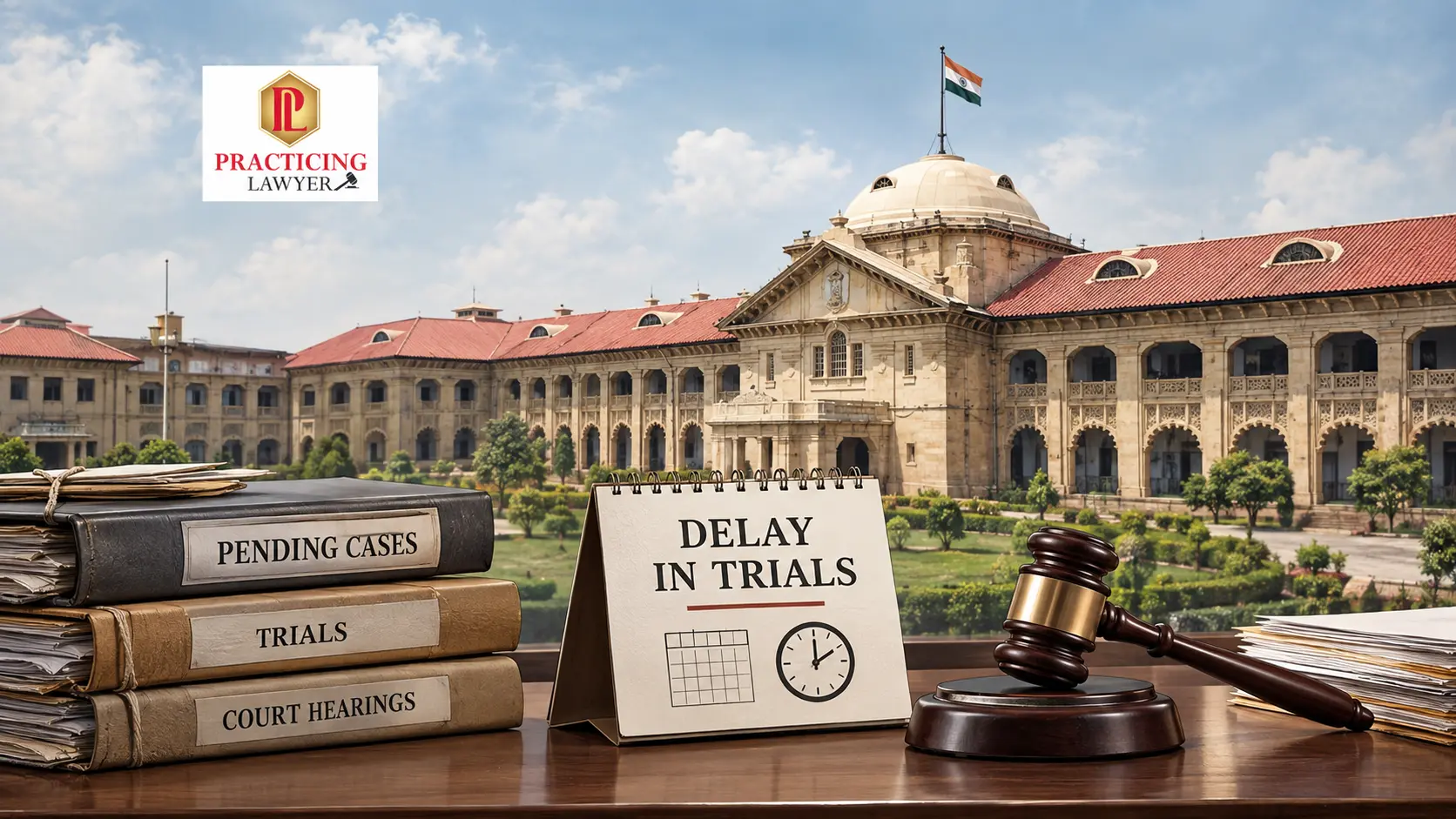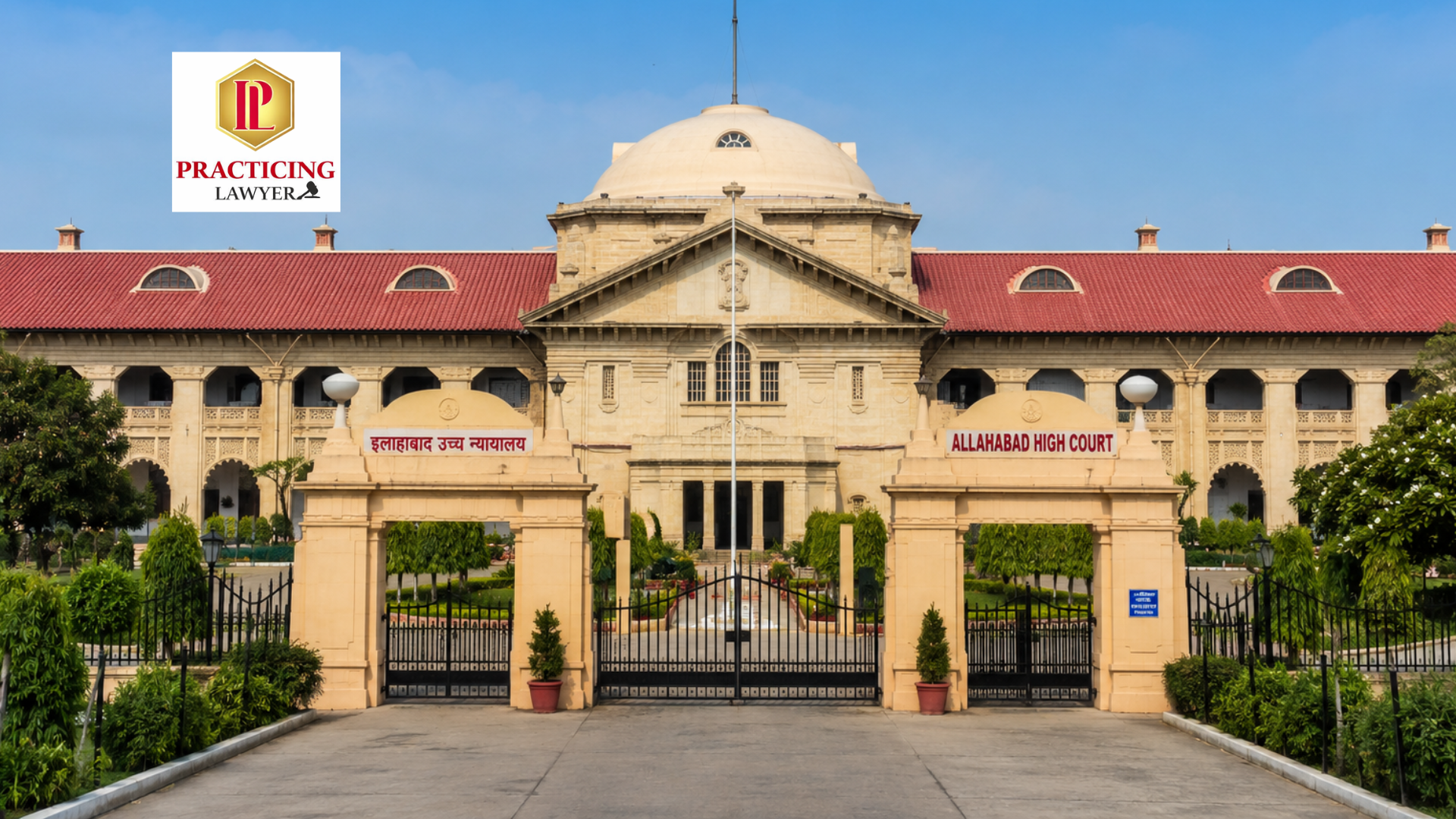
The Allahabad High Court has delivered a sharp indictment of the systemic failures behind the mounting pendency of criminal cases in Uttar Pradesh, observing that district courts are being unfairly blamed even though the “State Government as well as Police who are mainly responsible….” for delays caused by staff shortages, non-execution of court processes, and delayed forensic reports.
The Court remarked that criminals are exploiting this prolonged pendency to repeatedly commit offences and even enter legislatures and governments. Stressing that an independent judiciary cannot function “at the mercy of the State Government” for basic infrastructure and manpower, the Court directed the State to strengthen forensic laboratories, fill vacancies, improve execution of summons, and modernise criminal trials through digital processes.
The observations were made by Justice Arun Kumar Singh Deshwal while rejecting the bail plea of Mevalal Prajapati in Criminal Miscellaneous Bail Application.
The applicant had sought bail in Husainganj Police Station, Fatehpur under Sections 103(1), 238, 309(6) and 317(2) of the BNS, 2023.
Read also: https://practicinglawyer.in/allahabad-hc-grants-father-vacation-custody/
The matter had initially come before the Court in connection with the bail application, but during the hearing the Court noticed glaring deficiencies in the forensic investigation.
Despite sending a blood-stained screw driver for forensic examination, the investigating officer failed to ask the Forensic Science Laboratory (FSL) to verify whether the blood found on the weapon matched that of the deceased.
Taking serious note of this lapse, the High Court summoned senior State officials, including the Director of the Uttar Pradesh FSL, the Director General of Police and the Additional Chief Secretary (Home), to explain the shortcomings in the State’s forensic and investigative machinery.
During the proceedings, the Director of FSL informed the Court that Uttar Pradesh presently has 12 forensic laboratories, but only eight are equipped to generate DNA profiles.
The Court was also told that FSLs in the State are grappling with severe shortages of staff and advanced forensic machinery.
Read also: https://practicinglawyer.in/allahabad-hc-restrains-dna-test-paternity-case/
It further emerged that the FSL continues to function under the police department and has not yet been made an autonomous body under the Home Department despite repeated communications from the Union Ministry of Home Affairs.
The Court then undertook a comprehensive review based on feedback received from district judges and judicial officers across several districts, including Sambhal, Shamli, Moradabad, Hapur, Ghaziabad, Mathura, Maharajganj, Agra, and Bulandshahar.
The study identified a host of reasons behind the staggering pendency of criminal cases ranging from acute shortages of ministerial staff, stenographers and deposition writers to delays in forensic reports, ineffective execution of summons and warrants, non-appearance of witnesses, outdated infrastructure, and lack of coordination between police, prosecution and judiciary.
In one of the strongest observations in the order, the Court said that judicial officers are often left frustrated because they cannot effectively discharge their duties in the absence of adequate staff and police cooperation.
It noted that despite repeated requests from the High Court, the State Government had failed to sanction sufficient ministerial staff for district courts.
The Court further observed that the popular perception reflected in the famous “Tarikh pe Tarikh, Tarikh pe Tarikh Milti Rahi hai…” dialogue from the film Damini cannot be attributed to judicial officers alone, since courts cannot proceed efficiently without proper police support, witness attendance and timely forensic reports.
The Court further noted that judicial officers, particularly those dealing with serious criminal cases, are vulnerable to intimidation by hardened offenders, but unlike some other States, most judges in Uttar Pradesh are still without personal security officers.
Drawing a comparison with Punjab and Haryana, where all judicial officers are given PSOs, the Court urged the State Government to consider extending similar protection in Uttar Pradesh.
Emphasising the importance of digital reforms under the Bharatiya Nagarik Suraksha Sanhita (BNSS), the Court directed judicial officers to increasingly use e-summons, e-warrants and electronic transmission of charge sheets.
The DGP informed the Court that police are planning to adopt speech-to-text AI technology for recording witness statements and would ensure that verified email addresses, phone numbers and messaging application details of accused persons and witnesses are recorded during investigations and uploaded to CCTNS for faster electronic service of summons.
After recording the assurances of senior officials, the Court issued a series of directions to the State Government and police authorities.
These included filling vacancies in FSLs within a year, equipping laboratories with modern forensic instruments, training police officers in scientific evidence collection, ensuring the personal attendance of district police chiefs in monitoring meetings chaired by district judges, and taking disciplinary action against officers negligent in executing court processes.
On the merits of the bail case, however, the Court declined relief to the applicant. It noted that the applicant’s mobile location placed him near the scene of the crime and that the recovery of the deceased’s e-rickshaw and a blood-stained screw driver at his instance supported the prosecution case. Holding that these circumstances prima facie linked the accused to the offence, thus, the Court rejected the bail application.
Case: Mevalal Prajapati vs State of U.P.
Case No: Criminal Misc. Bail Application No. – 11476 of 2026
Date of Order: 07.05.2026
Status: Rejected